Here Today, Gone Tomorrow, Remembered Forever: What Pop-Ups Know That Your Brand Doesn't
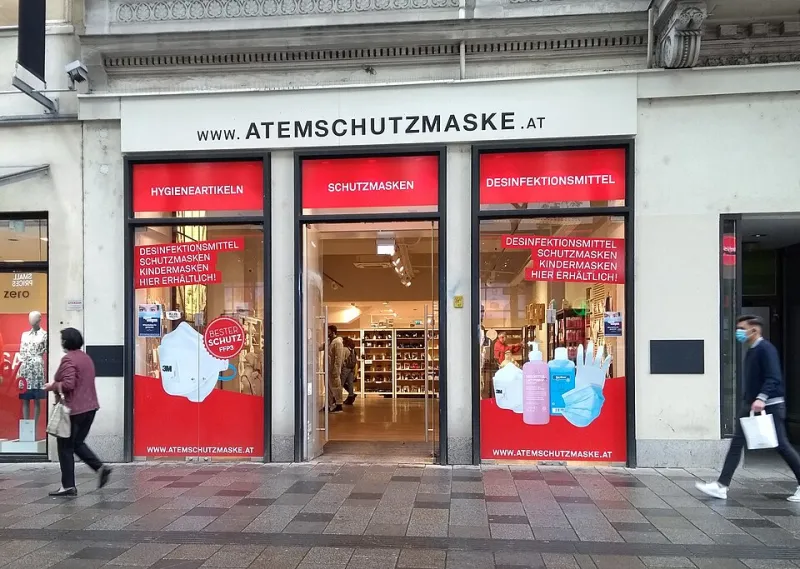
Photo: Herzi Pinki, CC BY-SA 4.0, via Wikimedia Commons
There's a particular kind of energy that only exists under a deadline that cannot move. Ask anyone who's ever built a pop-up shop, launched a flash sale, or run a limited-edition drop: when the clock is real and the doors are opening whether you're ready or not, something magical happens to the decision-making process. Nobody schedules a follow-up meeting. Nobody 'takes this back to the team.' You decide, you build, you ship.
Now contrast that with how most legacy American companies operate. A brand refresh that takes eighteen months. A campaign that spends longer in legal review than it will live in market. A 'rapid response' social strategy that requires three rounds of approvals. Somewhere along the way, size became an excuse for slowness, and slowness became a culture.
The Pop-Up Playbook Is Just Decision-Making Without the Padding
Strip away the aesthetics — the reclaimed wood, the neon sign, the line around the block — and a pop-up is really just a pressure cooker for creative judgment. Budgets are small, so there's no room for the safe, over-produced version of the idea. Timelines are brutal, so the idea that survives is the one everyone actually understands. And because the whole thing is temporary, the stakes of getting it perfect evaporate. Imperfection isn't just tolerated; it's part of the charm.
That last point deserves some unpacking, because it's the one that terrifies institutional brands. A pop-up that's a little rough around the edges reads as human. A permanent flagship store that's a little rough around the edges reads as a failure. Legacy companies are so afraid of permanent imperfection that they sand down everything until nothing interesting remains.
But here's the thing: the temporary mindset doesn't require a temporary build. It requires a temporary attitude. What if your next national campaign was treated like a four-week experiment? What if the brand team ran it with a startup budget, a hard launch date, and permission to be a little unfinished?
Small Budgets, Big Swings
There's a reason some of the most talked-about brand moments of the last few years came from scrappy activations rather than seven-figure media buys. When you can't buy attention, you have to earn it, and earning it demands an idea with actual teeth.
The grocery chain that turned a parking lot into a drive-through farmers market over a single weekend didn't run it through a global agency network. The sneaker brand that dropped 200 pairs in one city and let scarcity do the marketing didn't A/B test the concept for a quarter. These moves worked because the constraints were the strategy. Scarcity of time, money, and space forced clarity.
Legacy brands already have the assets pop-ups dream about — distribution, recognition, budgets. What they lack is the willingness to be decisive. The fix isn't structural; it's cultural. Give a small team a real deadline, a modest budget, and genuine authority, then get out of the way.
Borrow the Urgency, Keep the Scale
None of this means burning down your brand infrastructure. It means carving out space inside it for the pop-up mentality to breathe:
- Run sprints, not marathons. Treat every campaign like it closes on Sunday. The deadline moves nothing except your output.
- Cap the approvals. If an idea needs five sign-offs, it's already dead. Two is generous.
- Budget for experiments, not guarantees. A small bet you learn from beats a large bet you defend for a year.
- Let temporary be a feature. Not every brand moment needs to live forever. Some of the best ones shouldn't.
The brands that figure this out won't just move faster — they'll look more alive while doing it. Because swagger, it turns out, isn't something you can put in a brand book. It's something you demonstrate. Preferably before Sunday.